

Issue #4
Music and the Environments That Shape It

“You can’t touch music–it exists only at the moment it is being apprehended–and yet it can profoundly alter how we view the world and our place in it. Music can get us through difficult patches in our lives by changing not only how we feel about ourselves, but also how we feel about everything outside ourselves.”
Several months ago, a mentor told me that David Byrne studied architecture at RISD and everything clicked for me. Byrne has so many songs about spaces, materials, and buildings—of course he studied architecture. His songs “Glass, Concrete, and Stone,” “Strange Overtones,” and “This Must Be the Place” immediately come to mind (partly because they're on my Issue #2 playlist).
The above quote is from David Byrne’s 2012 book How Music Works, a book I have always wanted to read, and seen on many friends’ bookshelves, but never managed to tackle. I plan to finish reading his book this year as well as Liz Phair’s memoir, Horror Stories. They both are fantastic writers in their own ways, and they’re kind of my music mentors for Building Songs.
Another song on my playlist is “Space Song” by Beach House. And as luck would have it—my friend knows the drummer, Graham Hill, who also happens to be an architect. She was kind enough to connect me with him over email.
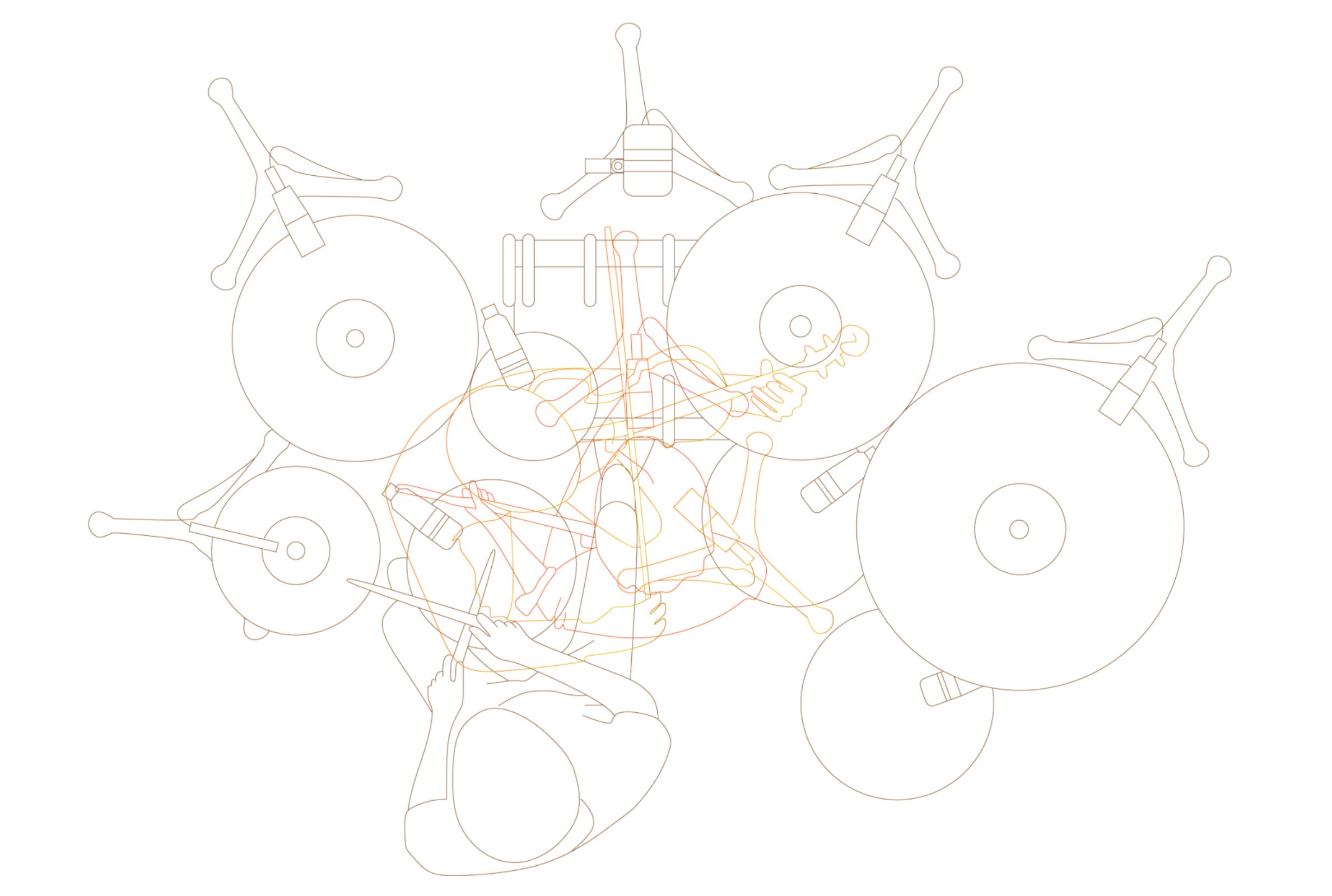
I spoke with Graham, a New Orleans architect and drummer for Beach House, over the phone last fall. He shared his experience recording albums in two studios, Dreamland in Hurley, NY and Studio in the Country in Bogalusa, LA.
Dreamland was an adaptive reuse of a church in a rural area of the Catskill Mountains with both bedrooms and a studio in one building. Studio in the Country, on the other hand, is a complex, with the studio in one building and bedrooms in separate cabins. Both studios feature access to meditative and recreative outdoor spaces where musicians can decompress after long recording sessions. Graham emphasized the importance of those natural spaces for the studios’ users, especially for long-term residencies at the facilities. There is a reason artists come back to rural studios. They often have the right balance: allowing the musicians to focus on the project but also the ability to escape into nature.

One other feature Graham drew attention to, which he noted most studios lack, was “support space”. Control rooms need the following: space in front of the engineering console to accommodate musicians listening back to recordings and “debriefing” space for musicians and producers to more broadly and contextually consider recordings. Recording musicians will be spending most of their time in the control room—the “command centers” of the facilities—so they need comfortable furniture and the physical space to let their inspiration stretch.
But those spaces also need to be able to accommodate other possible adjacent uses. Graham said he’s designed studios where the control rooms also serve as practice spaces and screening rooms, among other functions. The task of recording music isn’t simply a mechanical, notative process, but an expansive creative journey, and the spaces that facilitate it have to reflect that breadth.
I made a playlist that touches on this week’s themes: environments, songs evoking nature, and inspiring spaces. Did you forget? I am also a musician. The first song “High Noon” is from my music project Bri Barte. I wrote, performed, and recorded every element of the song. Listen here:
I’m taking an audio class at my local college in Mendocino county California and just this last session my teacher, whose engineer in a lot of places starting in Nashville presented the sunset studio, which one of the studio spaces has a couch in front of the control board in front of the control room. If you watched any of the Rolling Stone videos, there’s always a section where the stones are all hustles around a mixing control room listening. It’s probably the most important thing a band can do because often when you’re playing, you’re not hearing all the music, as it goes out into the audience, or in this case, onto a disk. Thanks for sharing this. I really appreciate your commentary and I’m subscribing.