

Issue #42
Weep Holes

New Show Announcement

I put a cool bill together for this one — an all women-fronted lineup that I’m really proud of. Tickets are only $10. Bring a friend. We would love to see you there.
Terrazzo @ Bowery Palace
Sunday, May 31 · New York City · $10
And hey — if you’re coming, leave a comment and let me know. I’d love to look out for you.
I’ve been down in the dumps lately, listening to sad songs, and staring off into space. Keeping it together feels like a full time job, and I already have one of those. On my 30-minute walk to work, I listen to audio books and notice quirks in the built environment. It is therapeutic.
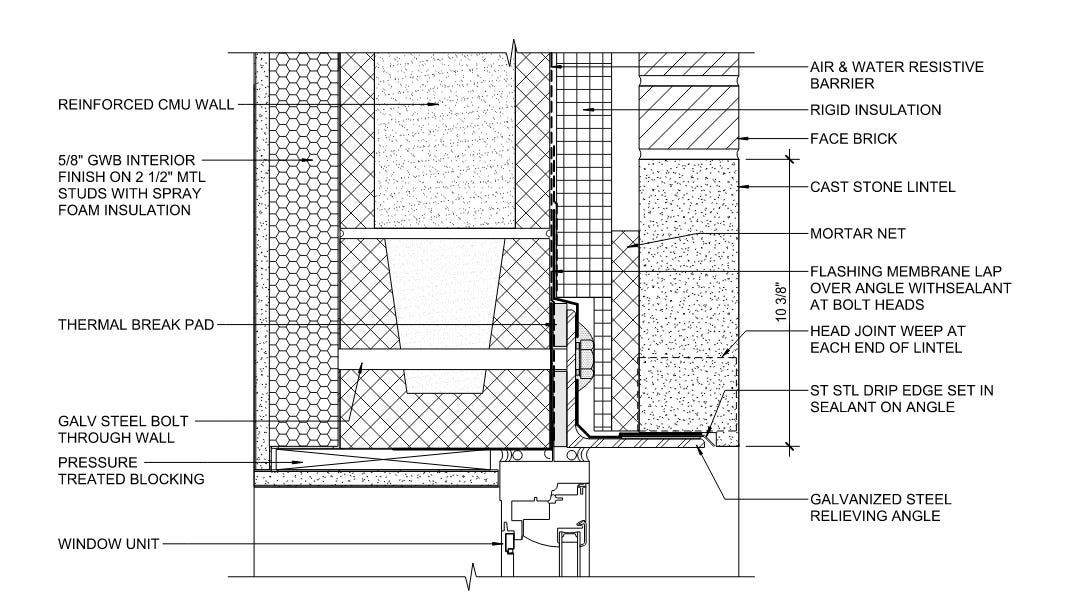
The other day, I was reminded of how masonry buildings cry. If you look at a brick building close enough you might notice tiny vertical gaps in the mortar. Sometimes this gap is covered with mesh that matches the color of the mortar — making it even harder to spot. These gaps are called weep holes, and they are how water that makes its way behind the masonry can find its way back outside.


These days, most brick facades are ventilated—separated from the building enclosure with a 1-2” air gap. Fired clay brick is porous, and needs this air gap to help with moisture control. If moisture gets trapped between the brick and building, the moisture can make its way inward—causing condensation, mold, dry rotting, and over-humidification inside the building. The air gap allows the brick to dry out and moisture to either evaporate or drain downwards and outwards.
A ventilated facade in songwriting might look like taking a 3-day break between an initial writing session and revision. This space allows the emotional sting of the new lyrics to drain, so the writer can assess the health of the song. Are the song elements working well together? What’s missing?

A good building envelope and a good song allow their component parts to do their job without risking the health of the whole system. Often, you don’t need a technically complex solution, you might just need a 1-2” air gap, a simple weep hole, or musical rest between parts. Sometimes the best solution comes from doing less.
As I’ve discussed before, buildings and songs need to attune to their environment to succeed. Building materials and musical elements need to be carefully selected and assembled to ensure the health of the overall system. Weep holes and air gaps are a building’s tear ducts, without them other building materials start to deteriorate.
So, I’m trying to take care and find solace in the spaces that keep me upright: my friendships, my songwriting practice, live music, long walks with my dog. They’re essential elements that support a system under adverse conditions. Buildings, songs, and Briannas aren’t so unalike! Alexa play “It’s My Party (and I’ll Cry If I Want To)”.
Do you give your creative work an “air gap” before revising? How long do you wait?

Thanks for reading y’all are the best.
Beautifully expressed! Sending my love.